


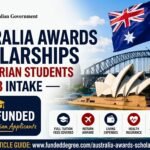
We’ve already covered Australia Awards Scholarships for Pakistani applicants — one of the only genuinely fully-funded programs we’ve verified on this site. Nigeria is also an eligible country, but the rules aren’t identical. Nigeria’s program runs through the regional Africa scheme, and a few of the eligibility details — age, work experience, priority fields — are meaningfully different from Pakistan’s. Here’s what we confirmed checking it directly.
Quick Facts
| Deadline | The 2027 intake closed in April 2026. The next opportunity — the 2028 intake — is expected to open February 1, 2027, closing around April 30, 2027. |
|---|---|
| Host Country | Australia |
| Starting Date | Studies typically begin in 2028 for this cycle (named by the year study begins, not the year you apply) |
| Monthly Stipend | Yes — a genuine fortnightly living allowance (Contribution to Living Expenses) is included, the same as every Australia Awards country program. |
Why This One’s Actually Fully Funded
Same as the Pakistan version of this program — confirmed benefits include:
- Full tuition fees at your Australian university, including pre-course English training if you need it
- Return air travel to and from Australia
- A one-off establishment allowance on arrival
- A fortnightly Contribution to Living Expenses — a real, recurring stipend
- Overseas Student Health Cover (OSHC) for the duration of the scholarship
- Introductory Academic Program (IAP) and supplementary academic support throughout your course
What Nigerian Applicants Specifically Need to Know
Nigeria’s program runs through the Australia Awards Africa scheme — not a Nigeria-only implementer the way Pakistan has its own dedicated site. That means Nigerian applicants should look to australiaawardsafrica.org, not a Nigeria-specific domain, for the current country profile. A few of the actual eligibility rules differ meaningfully from Pakistan’s version:
- Master’s level only — confirmed for the Africa program generally. Bachelor’s and PhD study are explicitly not supported.
- Minimum age 25 at the start of the intake year — this is the opposite shape of restriction from Pakistan’s rule, which sets a maximum age of 45 rather than a minimum.
- A minimum of five years’ post-graduate work experience in your priority field is required to be eligible at all — this is more specific and stricter than what we found for Pakistan’s version, so check this carefully before you invest time in an application.
- You must already hold a Bachelor’s degree, and if you already hold a Master’s, your new application needs to be in a different subject area or specialization.
- You must be a Nigerian citizen residing in Nigeria at the time of application, and not holding or applying for Australian citizenship or permanent residency.
Priority Fields for the Africa 2027/2028 Round
For the most recent confirmed round, the priority areas for eligible African countries, including Nigeria, were:
- Agriculture and food security
- Climate change
- Foreign policy and international security
- Gender, disability, and social inclusion
- Mining and energy
These are reviewed and can shift from round to round, so confirm the current list on australiaawardsafrica.org before building an application around one of them — don’t assume last cycle’s list carries over automatically.
English Requirement — Same Story as Everywhere Else on This Program
Duolingo doesn’t work here either. You’ll need a valid IELTS, TOEFL, or PTE result, same requirement structure as we found for Pakistan and consistent with Australia’s actual student visa rules, which we broke down in our Scholarships Without IELTS guide. The exact minimum score required is set out in the Australia Awards Scholarships Policy Handbook — check the current version before you sit your test, since it’s not something to assume from last year’s figure.
Required Documents
- Certified copies of your Bachelor’s degree certificate and transcripts (and Master’s, if applicable)
- A detailed CV documenting your post-graduate work experience
- Valid IELTS, TOEFL, or PTE score report
- Academic and employment referee reports
- A statement connecting your proposed field of study to one of the current priority areas and to Nigeria’s development needs — the same kind of development-linkage essay Pakistan’s program calls a DILP; the Africa program’s exact naming may differ slightly, so check the current handbook for the specific requirement
Step-by-Step Application Process
- Once the 2028 cycle opens (expected February 1, 2027), create your account on OASIS — the same application system used across all Australia Awards country programs.
- Download the current Africa Country Profile from australiaawardsafrica.org and confirm Nigeria’s specific conditions and current priority fields.
- Confirm you meet the five-year work experience minimum before you start — this is a hard eligibility bar, not a preference.
- Sit your IELTS, TOEFL, or PTE test early in the window if you haven’t already.
- Complete the OASIS application: personal details, academic and employment history, English proficiency, and your preferred study fields and institutions.
- Write your development-linkage statement, connecting your field and work history to a real priority area — give this real time, not a rushed final week.
- Collect your referee reports with enough lead time.
- Submit before the closing date and time — late submissions are not accepted.
Nigeria vs Pakistan — Which Rules Actually Apply to You
If you’re reading both of our Australia Awards guides trying to figure out which rules apply, it comes down to citizenship, not where you happen to be applying from. Nigerian citizens follow the Africa program’s rules (minimum age 25, five years’ work experience, the five priority fields above) — not Pakistan’s (maximum age 45, no explicit work-experience minimum found in our research, different priority fields). Don’t mix the two up when preparing your application.
Is This Worth Your Time?
If you’re a Nigerian professional with at least five years of relevant experience in agriculture, climate, governance, security, or a related priority field, and you’re specifically looking at Master’s level study, this is one of the strongest genuinely fully-funded options available to you. If you don’t yet have five years of post-graduate experience, or you’re looking for undergraduate or PhD funding, this particular program isn’t a fit right now — worth knowing early rather than after months of preparation.
Verified against oasis.dfat.gov.au, the official Australia Awards Africa Profile for the 2027 intake, and australiaawardsafrica.org. Priority areas, deadlines, and eligibility rules are reviewed and can change between cycles — always confirm current details on the official sources linked above before applying.
Our Scholarship Toolkit has an SOP template with two samples, CV guides, document checklists and interview questions, in Word and PDF. It won’t guarantee an award, but it helps you stay organized and on time. See what’s inside →
Related scholarship guides
- Australia Awards for Pakistani students
- Commonwealth Scholarship UK 2027/28
- Chevening Scholarship 2027/28: the full guide
- Fully funded scholarship in China 2026
- 7 fully funded scholarships in Germany
- How to write a winning statement of purpose
Want deadline alerts? Join our WhatsApp channel.