









Deadline: Set by each embassy, usually May to June. In Pakistan, the 2027-intake deadline was 26 May 2026 and has passed. The 2028-intake call hasn’t been announced yet. See the official deadlines by embassy.
Host country: Japan
Starting date: April or September/October of the year after you apply
Monthly stipend: ¥117,000 (undergraduate) up to ¥145,000 (PhD), depending on level
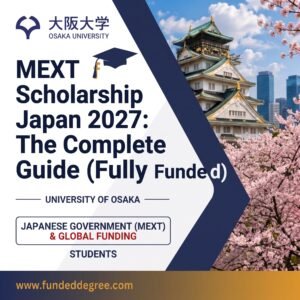
If you’ve been scrolling through scholarship groups and Facebook pages, you’ve seen MEXT mentioned over and over. People put it in the same breath as Fulbright and Chevening, and it earns that spot. It pays for tuition, gives you a monthly stipend and covers your flight. Here’s what the MEXT Scholarship is, who it’s for and what it takes to get one.
A quick note on timing: for the 2027 intake, the embassy round has already closed. The next round normally opens in April to May 2027, for students arriving in 2028. The university route runs on its own schedule, so read that section too.
MEXT Deadlines by Embassy (2027 Intake, All Closed)
MEXT doesn’t run on one global deadline. Each embassy sets its own, and for the 2027 intake the dates ranged from mid-May to the end of June 2026. None of these are open right now. The list below runs from the latest 2027-intake deadline to the earliest, with Pakistan last. Here’s what the embassies themselves published (checked October 18, 2026):
| Embassy | 2027-intake deadline (research students) | Status | Notes |
|---|---|---|---|
| Maldives | 30 June 2026, 5:00 p.m. | Closed | Physical documents |
| Micronesia (FSM) | 26 June 2026, 5:00 p.m. | Closed | Handed in at the Embassy of Japan, One World Plaza |
| Saudi Arabia (Riyadh) | 18 June 2026 | Closed | Email only, as a single PDF under 10 MB |
| Kuwait | 11 June 2026, 3:00 p.m. | Closed | Window opened 3 May; documents handed in with an appointment |
| Nigeria | 8 June 2026 | Closed | Hard copy only, in person or by post |
| Palestine | 4 June 2026, 4:30 p.m. | Closed | Submitted to the Representative Office of Japan to Palestine |
| Nepal | 31 May 2026 | Closed | The embassy page confirms research applications are closed; the 31 May date comes from a repost of the embassy notice |
| Zimbabwe | 29 May 2026 | Closed | Single envelope to the Embassy in Harare; late applications not considered |
| USA (Consulate General in Chicago) | 27 May 2026 | Closed | The consulate says 2028 applications will open in spring 2027 |
| Afghanistan | 25 May 2026 | Closed | Research students only |
| USA (Embassy in Washington, D.C.) | 21 May 2026 | Closed | Must be received by the deadline, not just postmarked |
| Kenya | 19 May 2026, 4:30 p.m. | Closed | The embassy expects the next window to open in April 2027 |
| India | 15 May 2026, 11:59 p.m. | Closed | Preliminary application form sent by email |
| Myanmar | 13 May 2026 | Closed | First screening runs through the Myanmar Association of Japan Alumni |
| Pakistan (Islamabad, Karachi) | 26 May 2026 | Closed | By post to the Embassy or the Consulate General; shortlisted candidates were contacted by the embassy |
Treat these as a pattern, not a prediction. As of mid-October 2026, the Embassy of Japan in Pakistan’s page still shows the 2027 call as closed, and we haven’t seen a 2028-intake announcement yet. When it comes, your embassy’s page is where the date appears first, so check there rather than waiting for a blog post (ours included).
Two things from the 2027 notices are worth knowing now. Submission rules differ by embassy, with some taking hard copies only and others email only. And research applicants had to be born on or after April 2, 1992.
What Is the MEXT Scholarship?
MEXT is Japan’s Ministry of Education, Culture, Sports, Science and Technology, the government body that oversees education. Every year it funds international students to study in Japan, from high school graduates starting a bachelor’s to researchers heading into a PhD. That’s what people mean by “the MEXT Scholarship.” It isn’t run by a single university. It’s a national program, similar in spirit to the Fulbright Scholarship in the US or Chevening in the UK.
The funding is unusually complete. No tuition, no plane ticket to save for, and no formal requirement to go back and work for your government afterward (check the current guidelines for conditions). You study, you finish, and what you do next is up to you.
What Does the MEXT Scholarship Cover?
“Fully funded” is often marketing language that leaves out half the real costs. With MEXT it mostly means what it says. Here’s the breakdown:
| What’s Covered | Details |
|---|---|
| Tuition & entrance fees | 100% waived: examination fee, admission fee and full tuition |
| Monthly stipend | ¥117,000 for undergraduates; ¥143,000 for research students; ¥144,000 for Master’s; ¥145,000 for PhD (figures are reviewed yearly, so treat these as close estimates) |
| Airfare | Round-trip economy flight between your home country and Japan |
| Japanese language course | Up to six months of free preparatory Japanese classes if you need them |
| Return-service obligation | No formal service bond. Check the current guidelines for conditions. |
| IELTS/TOEFL requirement | Not required for the scholarship itself, though some English-taught programs may ask for it separately |
A small regional allowance (about ¥2,000 to 3,000 more per month) can be added if your university is in a higher cost-of-living area like Tokyo. It’s not huge, but it helps when you’re paying rent in yen.
Who Can Apply, and Which Type of MEXT Fits You?
This is where most people get confused. MEXT isn’t one scholarship. It’s an umbrella over several categories, and international students mostly apply for these two:
- Research Students (Graduate Program): for anyone with a bachelor’s degree who wants a Master’s or PhD in Japan. You start as a “research student” for six months to a year before formally enrolling in the degree. It sounds odd, but it’s just how the Japanese system eases people in.
- Undergraduate Program: for high school graduates (or people about to graduate) who want to start a bachelor’s degree in Japan. Teaching is mostly in Japanese, after an initial language-prep year.
There are a few smaller tracks too: Japanese Studies, Teacher Training, Specialized Training College and the College of Technology program. But the two above are what nearly everyone reading this will care about.
The basic eligibility looks like this. You need citizenship of a country that has diplomatic ties with Japan, you need to meet the age requirement for your category (for the 2027 intake, research applicants had to be born on or after April 2, 1992, which works out to under 35; the cutoff moves forward each year), and you need the academic record your field expects. For a research degree, a rough idea of what you want to study, and ideally which professor in Japan you’d like to work under, puts you ahead of most applicants.
Two Ways In: Embassy Route vs. University Route
A lot of guides skip this, but there are two doors into MEXT and they work quite differently.
Embassy recommendation is the one most people use. You apply through the Japanese Embassy or Consulate in your own country. They run a written exam and an interview, shortlist candidates and forward the strongest to MEXT for final approval. It’s open to anyone who meets the criteria, and you don’t need an invitation from a university.
University recommendation works differently. A Japanese university nominates you directly, usually after a professor has already agreed to supervise you. You skip the embassy exam, but you need to have made contact with a professor and gotten their informal agreement first, and that’s a hurdle of its own. If cold-emailing professors sounds intimidating, we’ve written a full guide on how to do it properly. Read it before you try this route.
Both routes lead to the same scholarship and the same benefits. The embassy route has far more applicants and lower odds per seat, but it’s open to everyone without needing a professor’s blessing first.
The Application Timeline (and Why You Need to Check Your Own Embassy)
This trips people up all the time: MEXT doesn’t run on one global deadline. Each Japanese embassy sets its own schedule, and the dates can differ by weeks or even months from country to country. Roughly, the embassy route goes like this:
- April to June: Applications open through embassies worldwide, for students planning to arrive the following year
- May to July: Written exams and interviews at the embassy
- Around August: Embassy shortlist sent to MEXT for the first screening
- Around September: Shortlisted candidates contact Japanese universities to request a Letter of Provisional Acceptance
- November onward: MEXT and the university do the second screening
- Around February to March the following year: Final results
- April or September/October: Scholars arrive in Japan and start their program
If you’re applying from Pakistan, applications go to the Embassy of Japan in Islamabad or the Consulate General in Karachi, and each posts its own dates. For the 2027 intake the deadline was 26 May 2026. Confirm exact dates on the Embassy of Japan in Pakistan’s MEXT page, not on a blog (ours included). The general rules are on the Study in Japan embassy recommendation page. A missed date here means waiting a full year.
Do You Need IELTS or Japanese Language Skills?
Short answer: not for the scholarship application itself. MEXT doesn’t set a blanket IELTS or JLPT requirement for the award. Two things still matter. If you’re aiming for an English-taught graduate program, the university (not MEXT) may want an English test score for its own admission. And if your program is taught in Japanese, MEXT provides language training before your course starts, so you’re not expected to show up fluent.
So don’t let a missing IELTS score stop you from applying. Check what your target university wants, not what you assume MEXT wants.
How Competitive Is It?
MEXT is tough, and there’s no point sugarcoating it. In some countries thousands apply for a research student place through the embassy route, and the number of places per country is limited, sometimes to a few dozen. MEXT doesn’t publish official acceptance rates, but figures as low as 2 to 3 percent have been reported for high-demand countries. That’s not meant to discourage you. It’s meant to help you go in prepared instead of assuming a strong CV will carry you.
What helps is a clear, specific research plan (for graduate applicants), a real connection with a potential supervisor if you can manage one, and an application with no gaps or vague answers. Reviewers read hundreds of these. The ones that stand out are specific, not the ones that sound impressive.
The Documents You’ll Need to Prepare
The paperwork isn’t complicated, but it’s long, and each embassy tweaks the exact list a little. Across almost every country, expect to gather:
- A completed application form, downloaded fresh from the current year’s guidelines (old forms get rejected)
- Academic transcripts and degree certificates, sometimes with official translation into English or Japanese
- A Field of Study and Research Plan (graduate applicants). This carries the most weight, so don’t leave it for last
- Two recommendation letters, usually from professors or supervisors who know your work
- A medical/health certificate, filled out by a licensed physician on the official MEXT form
- A copy of your passport or proof of citizenship
- Photographs that meet the size requirements in the guidelines (they do check)
- A Placement Preference Application Form, where you rank the universities or regions you’d consider
None of this is unusual for a government scholarship, but the volume catches people off guard if they only start collecting documents after the window opens. Give yourself at least a month’s head start.
What Happens After You’re Shortlisted
Passing the embassy’s first screening feels like the finish line, but it’s closer to the halfway point. Once you clear the written exam and interview, the embassy sends your file to MEXT along with a “Passing Certificate.” After that, part of the work is on you. You need to contact Japanese universities yourself, often through their own admissions support systems, to get a Letter of Provisional Acceptance. MEXT won’t place you anywhere unless a university agrees to take you. So the embassy interview tests your general fit for the scholarship, but the university outreach afterward is what decides where you actually study.
This is where homework on specific professors and departments pays off. Applicants who write with a clear, relevant research interest tend to hear back faster than those sending generic requests.
Can You Live on the Stipend?
It’s a practical question people forget to ask while they’re excited about “fully funded.” In most Japanese cities, yes, though it depends where you end up. ¥144,000 a month goes much further in a smaller city like Sendai or Fukuoka than in central Tokyo, where rent can take a bigger bite. Most MEXT scholars manage by sharing housing or choosing university dormitories, which tend to be cheaper and are often prioritized for scholarship students. Public transport and food also cost less than many people expect, and daily life is nowhere near as pricey as studying in central London or New York.
Common Mistakes People Make
A few patterns show up again and again in rejected applications:
- Vague research plans. “I want to study renewable energy in Japan” tells the panel nothing. What specifically? Under whose supervision? Why Japan and not somewhere else?
- Missing the embassy deadline while waiting on a document. Start collecting transcripts, certificates and recommendation letters weeks before the window opens.
- Applying to the wrong category. Some people apply as research students when they qualify for a more specific track, or the other way around. Read the guidelines for your exact situation.
- Treating the embassy and university routes as interchangeable last-minute options. They aren’t. The university route needs lead time to contact a professor, sometimes six months or more before the deadline.
- Ignoring the age cutoff. It’s usually around 35 for graduate programs, but the exact wording (birth date cutoffs) matters. Check it precisely instead of assuming you qualify.
Questions People Ask About MEXT
Is the MEXT Scholarship really 100% free?
For the things that matter most, yes. Tuition, entrance fees, airfare and a monthly living stipend are covered. You’ll still pay for small things like extra groceries, phone bills or a bike, but there’s no tuition bill and no return airfare to worry about.
Can I apply for MEXT without a bachelor’s degree yet?
For the undergraduate track, yes. That category is for people finishing high school. For the Research Student (graduate) track, you generally need a bachelor’s degree or be about to finish one.
Do I need to know Japanese before applying?
No. Japanese isn’t a requirement to apply, and the scholarship includes language preparation if your program needs it.
How many times can I apply for MEXT?
There’s no official cap on attempts, but each embassy sets its own age and eligibility limits per cycle. Check that you still qualify before you reapply.
What’s the difference between MEXT and a Japanese university scholarship?
MEXT is funded and run by the Japanese national government and can be used at almost any Japanese university that accepts you. University scholarships are smaller programs run by individual schools, usually with narrower eligibility and less money.
Can I bring my spouse or kids with me on MEXT?
MEXT doesn’t provide a dependent allowance, but scholars can generally bring family members on a dependent visa if they can show they can support them. The stipend is meant for the student alone.
When is the MEXT deadline for the 2028 intake?
Not announced yet. For the 2027 intake, embassies opened applications between late April and early May 2026 and closed them between mid-May and the end of June, depending on the country (Pakistan closed on 26 May 2026). If 2028 follows the same pattern, expect something similar in spring 2027, but only your embassy’s own page gives the real date.
Is a research proposal required for the undergraduate track?
No. The research plan is for graduate applications (research student, Master’s, PhD). Undergraduate applicants are assessed on academic records, exams and interviews.
Where MEXT Fits Alongside Other Options
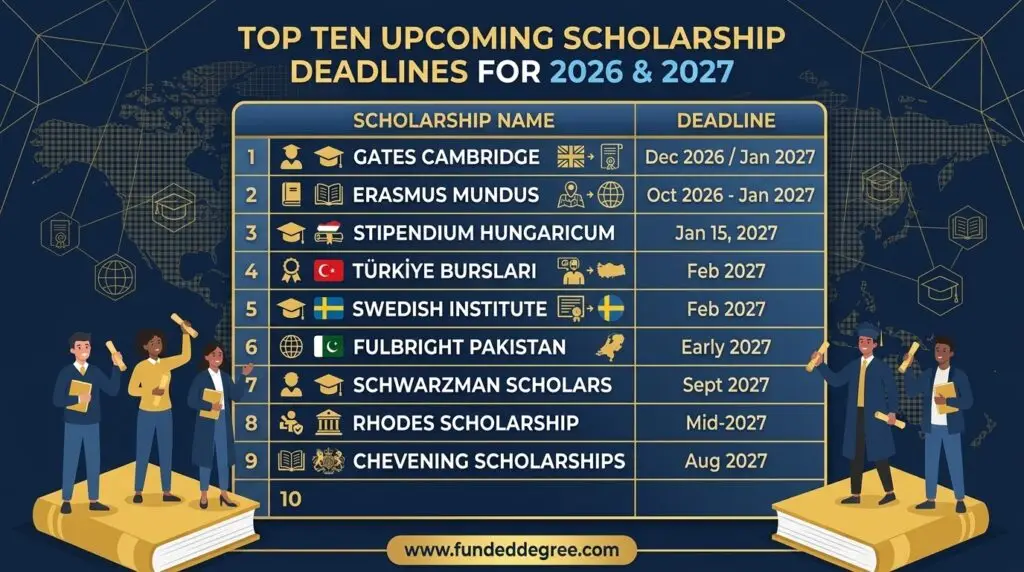
If Japan isn’t your only option, compare MEXT with similar fully funded programs before you commit your time to one application. Our DAAD guide for Germany and the Commonwealth Scholarship for UK study are both strong alternatives with a similar level of funding. Many students apply to two or three of these in the same cycle, since the timelines don’t always overlap. If you’re applying from Pakistan, Stipendium Hungaricum and Australia Awards are worth tracking alongside MEXT, and our live scholarships deadline tracker shows which windows are open right now.
And if you’re at the stage of writing your research plan or statement of purpose, our guide on writing a statement of purpose covers the structure selection panels actually read closely.
Need Help With the Paperwork?
Reading about MEXT is one thing. Writing a research plan that sounds like it came from a specific person with a specific goal, not from a template, is another. If you’d rather not work through the trial and error alone, our team can prepare your full MEXT application package. It’s a paid service, and here’s what we put together for you:
- A tailored field of study and research plan, written around your background and goals
- A properly structured Statement of Purpose / Motivation Statement
- Help finding potential Japanese supervisors and drafting outreach emails (for the university route)
- A completed application form, filled out per the latest MEXT guidelines
- A document checklist for your category, so nothing gets missed before the deadline
- Interview preparation notes based on the kinds of questions embassies ask
If you’d like our team to handle this, message us on WhatsApp at +92 300 4444800 and we’ll explain how it works.
Stay Updated on Deadlines
MEXT deadlines change every year and vary by embassy, and a lot of students miss out simply because they heard too late. We post scholarship openings and deadline reminders, MEXT included, on our WhatsApp channel. Join it here so you catch the window when it opens for your country.
Studying in Japan on a full scholarship isn’t a fantasy. Plenty of students do it every year. It takes getting your paperwork right, applying through the route that fits your situation and not missing your embassy’s deadline. Start early, be specific in what you write, and give yourself a real shot at one of the most generous scholarships out there.
Our Scholarship Toolkit has an SOP template with two samples, CV guides, document checklists and interview questions, in Word and PDF. It won’t guarantee an award, but it helps you stay organized and on time. See what’s inside →
Related scholarship guides
- Fully funded scholarship in China 2026
- Fully funded scholarships without IELTS (2027)
- How to write a winning statement of purpose
- Scholarship eligibility checker
Want deadline alerts? Join our WhatsApp channel.