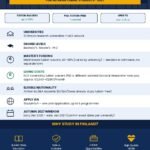





Deadline: Country-specific, set by your own Fulbright Commission (e.g. Pakistan: April 1, 2026 for the 2027 cycle; next cycle approximately April 1, 2027. Note: this is an approximate date, based on the previous schedule) — not one global date
Host Country: United States
Starting Date: Around mid-year (e.g. July onward), roughly a year after your country’s deadline — timing varies by country
Monthly Stipend: A living stipend is included, but the exact amount is set by each country’s Fulbright Commission — not one published global figure
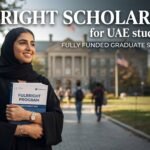
Fulbright Scholarship USA: How to Get Fully Funded for a Master’s or PhD
If you’ve spent any time researching fully funded scholarships the USA has to offer, you’ve run into the word “Fulbright” about fifty times already. It shows up on every list, every forum thread, and every “top 10 scholarships” YouTube video. And honestly? It deserves the attention. But most of what’s written about it online is either recycled marketing copy or so vague it’s useless. I’ve sat across the table from students filling out this exact application, and I want to walk you through what it actually is, what it pays for, and where people trip themselves up.

Let’s start with the basics, because a surprising number of applicants get this part wrong before they even open the portal.
What the Fulbright Foreign Student Program Actually, it is
Fulbright isn’t a single scholarship; it’s an umbrella. The U.S. Department of State runs it as the flagship exchange program of the U.S. government, and it’s been around since 1946, started by Senator J. William Fulbright as a way to fund international exchange using surplus war property sales. Today it operates in more than 160 countries, and the branch that matters to most readers here is the Fulbright Foreign Student Program, the one that brings graduate students, young professionals, and researchers from outside the U.S. to study at American universities.
Roughly 4,000 people receive this award every year, worldwide. That number sounds big until you realize it’s spread across 160-plus countries, each running its own separate competition with its own deadline, its own quota, and sometimes its own extra requirements. This is the part people miss constantly: Fulbright isn’t one global application. You apply through the Fulbright Commission or the U.S. Embassy in your own country, not through some central U.S. portal. In Pakistan, for instance, the program is run by the United States Educational Foundation in Pakistan, USEFP, which has been doing this since 1950 and has sent more than 9,000 Pakistanis to the U.S. through various exchange programs.
So the first thing to do, before anything else, is find your country’s Fulbright Commission page. Everything downstream—deadlines, test requirements, quotas—depends on it.
What It Actually Pays For
This is where Fulbright earns its reputation as a fully funded scholarship, not a “fully funded” scholarship with an asterisk. Looking at USEFP’s own program page, the award for Pakistani grantees covers tuition, required textbooks, round-trip airfare, a living stipend, and health insurance. Several country programs go further—a laptop or computer allowance, visa fees, and a one-time settling-in payment once you land. You’re not expected to bring savings to cover rent or groceries. That stipend is meant to be your income for the length of the program.
What it does not cover is your family. If you’re married or have kids, Fulbright doesn’t fund dependents’ travel or living costs—that’s on you, and it’s worth knowing before you start dreaming about the whole household relocating on scholarship money.
Here’s a country-specific snapshot, since the details genuinely shift depending on where you’re applying from:
| Element | USEFP Fulbright (Pakistan) — 2027 Cycle |
|---|---|
| Administering Body | United States Educational Foundation in Pakistan (USEFP) |
| Official Application Link | www.usefp.org |
| Application Deadline | April 1, 2026 |
| Degree Levels Funded | Master’s and PhD (not undergraduate) |
| English Test Required | TOEFL only—IELTS is not accepted; a test is required from shortlisted/selected candidates, not at the initial application. |
| Other Test Required | GRE General Test—minimum 145 per section under the current scale |
| Financial Coverage | Tuition, textbooks, round-trip airfare, monthly living stipend, health insurance, visa fees, computer allowance, settling-in allowance |
| Dependents Covered | No |
| Return-Home Obligation | Minimum 2 years in Pakistan after the program (J-1 visa condition); PhD grantees also sign an HEC bond. |
I’m using Pakistan as the working example because it’s well documented and it’s genuinely representative of how most country programs are structured. If you’re applying from Lebanon, Croatia, Tunisia, or anywhere else, the shape is similar—deadline, GRE or equivalent, English test, similar coverage—but the exact numbers and dates belong to your own country’s Commission page, so don’t copy the table above as gospel for your situation.
The English Test Question Nobody Explains Properly
I want to spend a paragraph on this because I see it cause confusion constantly. Applicants assume Fulbright works like most other U.S. scholarships, where you submit an IELTS or TOEFL score with your application. It doesn’t, at least not for Pakistan and most other country programs. IELTS isn’t accepted at all. TOEFL is the only test USEFP recognizes, and—here’s the part people miss—you don’t need to have taken it before you apply.
It only becomes mandatory once you’ve cleared the earlier rounds and USEFP asks you to sit for it, using their institution code (9388) so the score routes directly to them. Some other country commissions accept the Duolingo English Test as an alternative later in the process, but check your own commission’s page rather than assuming. Don’t burn money on an IELTS attempt thinking it’ll help your Fulbright file. It won’t. (Consider applying for scholarships without IELTS instead).
Who’s Actually Eligible
Fulbright funds graduate study — Master’s and PhD—not bachelor’s degrees. If someone’s telling you they got a “Fulbright” for undergrad, they’re either mistaken or talking about a different, much smaller program. For Pakistan specifically, USEFP asks for 16 years of formal education, meaning either a four-year bachelor’s degree on its own or a shorter bachelor’s paired with a master’s that adds up to 16 years total. Nearly every academic field is open—engineering, public policy, economics, journalism, the arts, education, you name it—with one consistent exclusion: clinical fields like medicine, dentistry, pharmacy, and clinical nursing aren’t eligible, though public health and nursing administration are fine.
A couple of narrower rules trip people up. If you’re going for an MBA or a public policy/administration degree, you generally need two years of relevant work experience—this isn’t a fresh-graduate track for those fields. And if you’ve already spent six months or more in the U.S. recently on a J-visa or another U.S. government-funded program, you’re typically disqualified from applying again. Dual nationals with U.S. citizenship, or people with a U.S. citizen spouse, parent, or fiancé, also fall outside eligibility. These aren’t arbitrary—they exist to keep the program focused on genuinely international exchange, not people who already have deep U.S. ties.
GRE: Yes, You Still Need It
For Pakistan’s program, the GRE General Test is required for every applicant, no exceptions carved out for strong grades or work experience. Under the current scoring system, USEFP wants a minimum of 145 on each section—verbal and quantitative—with the expectation that your stronger section aligns with your field. If you’re applying for an engineering program, a Quant score that barely clears 145 while your Verbal is impressive isn’t going to read well to the committee. Send your scores using both codes: 9388 for USEFP and 2326 for IIE, the Institute of International Education, which handles placement for Fulbright students once they’re selected.
Start the GRE early. Not because it’s brutally hard, but because it’s one more moving piece in an application that already has essays, transcripts, reference letters, and (eventually) a TOEFL score all competing for your time in the months before the deadline.
What the Application Actually Involves
Walk through it like this, roughly in order:
You’ll create an account on your country’s Fulbright portal—for Pakistan, that’s usefp.org—and start building your profile with academic and personal details. Alongside that, you’ll write a Statement of Purpose laying out what you want to study and why, and if you’re a PhD applicant, a research proposal on top of that. Some country programs, Pakistan included in past cycles, have asked for supporting essays running 800 words or more, so budget real time for these, not something you draft the night before.
You’ll need transcripts from your undergraduate degree (and graduate work, if applicable), preferably HEC-attested if you’re in Pakistan, though university-attested copies are usually accepted too. Three recommendation letters go in alongside your application—at least one from an academic reference and one from a professional or work context, based on how USEFP structures it, though the exact mix can vary elsewhere. Your GRE score gets uploaded if you already have it; an unofficial report is fine at the application stage if your official one hasn’t arrived yet.
Once the portal closes on the deadline—April 1, 2026 for Pakistan’s 2027 cycle—the review process kicks in. USEFP runs it in stages: first a completeness and eligibility screening, then a merit-based shortlisting round, followed by in-person interviews typically held between July and September, conducted by a panel mixing U.S. and Pakistani representatives along with Fulbright alumni. Final selections and alternates usually get confirmed around October. From there, IIE handles matching you with a U.S. university; visa interviews generally happen around June of the following year, and departure lines up with the university’s own reporting dates—often July onward.
That’s close to a full year between submitting your application and actually flying out. Plan your other commitments—jobs, other applications, family stuff—with that runway in mind.
The Part Everyone Forgets to Ask About: Coming Home
Fulbright grantees travel on a J-1 exchange visitor visa, and that visa comes with a two-year home residency requirement. You go back to your home country for a minimum of two years before you’re eligible for certain other U.S. visa categories again. For Pakistani PhD recipients specifically, there’s an additional layer—a bond with the Higher Education Commission that formalizes the return commitment, redeemable on a year-for-year basis.
This isn’t a loophole or a technicality you can quietly ignore. It’s baked into the visa itself. If your long-term plan is to immigrate to the U.S. right after graduating, Fulbright’s structure works against that goal—it’s designed as an exchange, meaning you take what you learn back home, not a stepping stone to permanent U.S. residency. Go in knowing that, and you’ll avoid a lot of disappointment two years down the road.
Why This One’s Worth the Effort
I’ll be blunt: the Fulbright application is long, and the waiting period between submission and a final answer stretches for months. Compared to a straightforward university-specific scholarship with a single online form, it asks more of you. So why do students still chase it, year after year?
Because it’s one of the few scholarships that genuinely doesn’t ask you to compromise on where you study. Once you’re selected, IIE places you at a U.S. institution that fits your academic goals—you’re not locked into one specific university’s scholarship budget the way you are with most other funded programs. And the alumni network is enormous; Fulbright has run since 1946, which means decades of graduates now sitting in government, academia, and industry across dozens of countries. That’s not nothing when you’re job-hunting five years after your degree.
It’s also one of the more merit-broad programs out there. USEFP explicitly says it looks beyond just GPA and test scores—leadership potential and a demonstrated commitment to contributing back to your home country carry real weight in the selection criteria. If your grades are solid but not perfect, and you’ve got a genuinely strong track record of community involvement or professional impact, you’re still in the running. That’s different from scholarships that filter almost entirely on a GPA cutoff.
A Few Honest Tips From Watching This Process Up Close
Don’t wait until three weeks before the deadline to start your Statement of Purpose. The strongest ones I’ve read went through five or six drafts, with feedback from people outside the applicant’s own head—a mentor, a former professor, someone who’ll actually tell you when a paragraph is vague.
Match your GRE prep to your field, not to a generic target score. A public policy applicant with a strong verbal score and a middling Quant score is in better shape than the reverse would suggest, and vice versa for a STEM applicant.
Take the eligibility exclusions seriously before you invest months into an application. If you’ve spent the last six months in the U.S. on a J-visa program, or you’re pursuing a clinical medical degree, save yourself the effort and look at alternative paths instead.
And don’t assume your country’s deadline matches what you read on a random blog. Pakistan’s 2027 cycle closed April 1, 2026; Lebanon’s ran to May 4, 2026; Sierra Leone’s closed April 5, 2026. Three neighbors on a map, three completely different dates. Always confirm directly on your own commission’s official page before you build your timeline around anything you read secondhand—including this article.
Frequently Asked Questions
Is the Fulbright Scholarship really fully funded?
Yes, for the grantee. Tuition, a living stipend, airfare, health insurance, and—depending on your country’s program—a computer allowance and settling-in payment are all covered. Dependents’ costs are not.
Can I use IELTS instead of TOEFL for Fulbright?
Not for Pakistan’s program, and not for most country programs (explore options without IELTS if you lack TOEFL). TOEFL is the standard test, requested only after you clear the earlier selection rounds—not at the initial application.
Does Fulbright fund bachelor’s degrees?
No. It funds Master’s and PhD studies through the Foreign Student Program. Undergraduate students aren’t eligible for this particular track.
How competitive is Fulbright?
Extremely. Around 4,000 grants are awarded globally each year across more than 160 countries, and individual country quotas are often small—a handful to a few dozen per cycle, depending on the country’s program size.
What happens if I don’t return home after my Fulbright program?
You’re violating the terms of the J-1 visa’s two-year home residency requirement, which can affect your eligibility for other U.S. visa categories later. For Pakistani PhD grantees, there’s also an HEC bond tied to the return commitment.
This article reflects publicly available information from USEFP and official U.S. Department of State Fulbright program pages as of September 2026. Deadlines and requirements shift year to year; always verify current details on your own country’s official Fulbright Commission website before applying.
Our Scholarship Toolkit has an SOP template with two samples, CV guides, document checklists and interview questions, in Word and PDF. It won’t guarantee an award, but it helps you stay organized and on time. See what’s inside →
Related scholarship guides
- Chevening Scholarship 2027/28: the full guide
- Commonwealth Scholarship UK 2027/28
- SMART Scholarship 2027 in the USA
- More fully funded scholarships in the USA
- How to write a winning statement of purpose
Want deadline alerts? Join our WhatsApp channel.